Urban Vitality and Noise Level (2020)
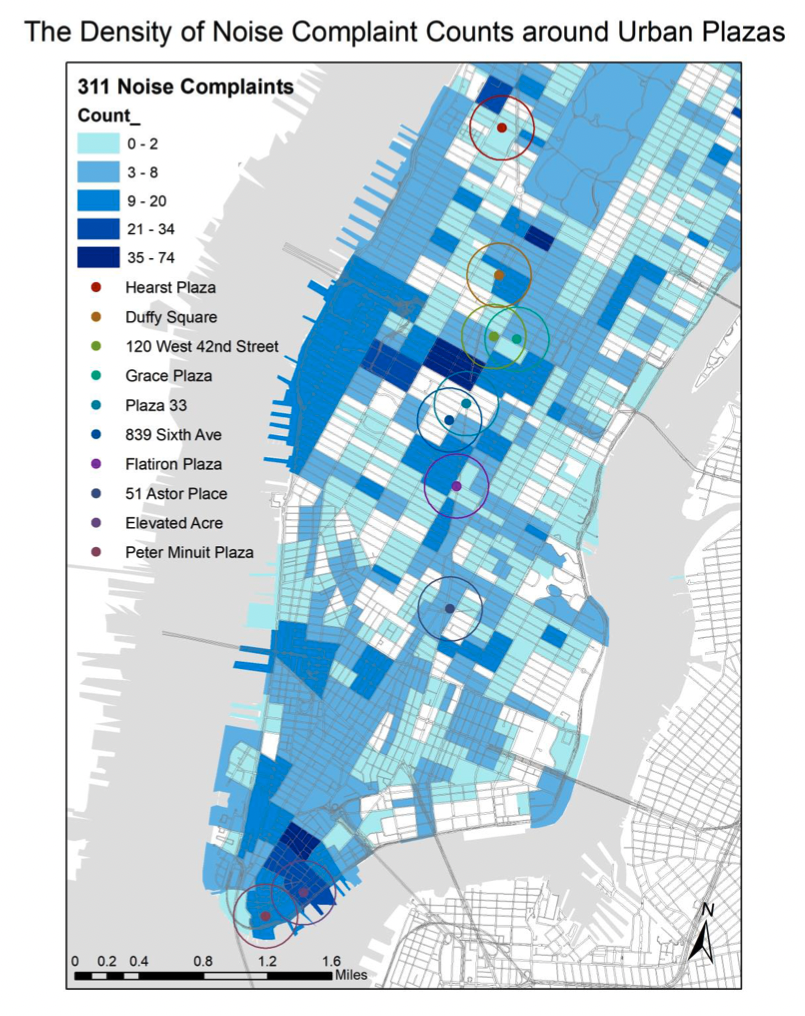
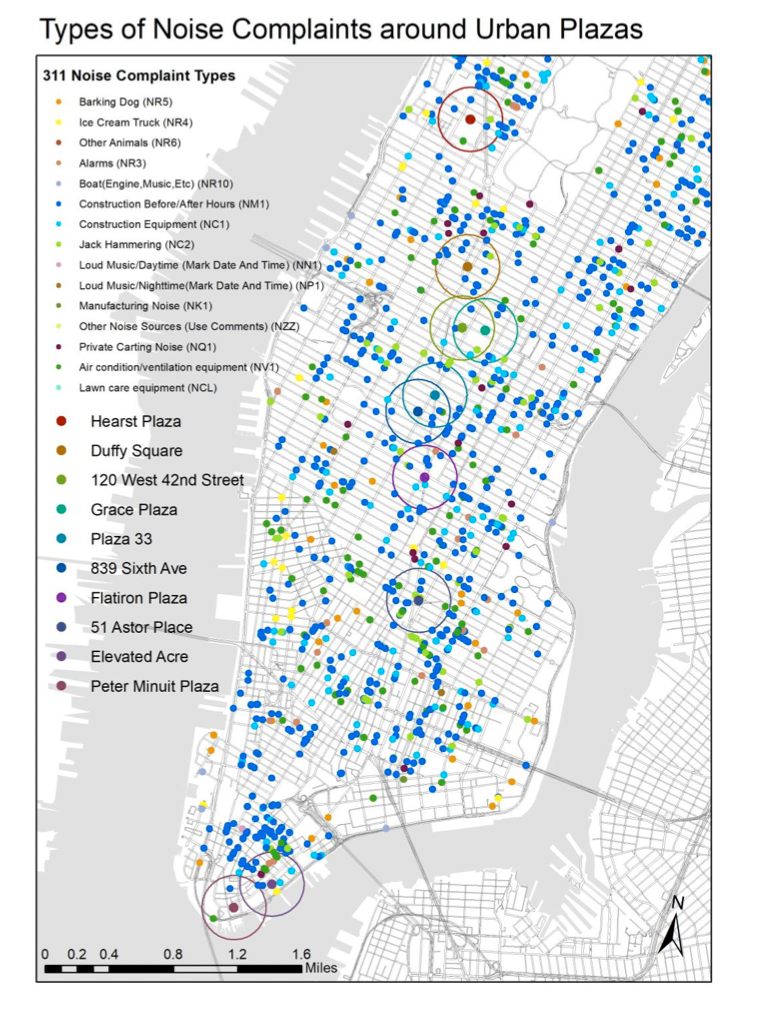
Inspired by William H. Whyte’s The Street Life Project and SWA’s 2018 re-investigation, this project examines the relationship between 311 noise complaints and urban vitality around ten public plazas.
Using ArcGIS, I analyzed noise patterns during the same time period as SWA’s study. I hypothesized that more successful plazas would exhibit higher noise levels due to intensive use and social activity.
The analysis revealed that elevated noise levels were primarily driven by mechanical sources—especially construction—rather than human activity. Well-used plazas did not generate higher levels of human-caused noise compared to surrounding blocks, suggesting that vibrant public life contributes to an urban “soundscape” without increasing noise pollution complaints.
Racialized Placemaking (2021)
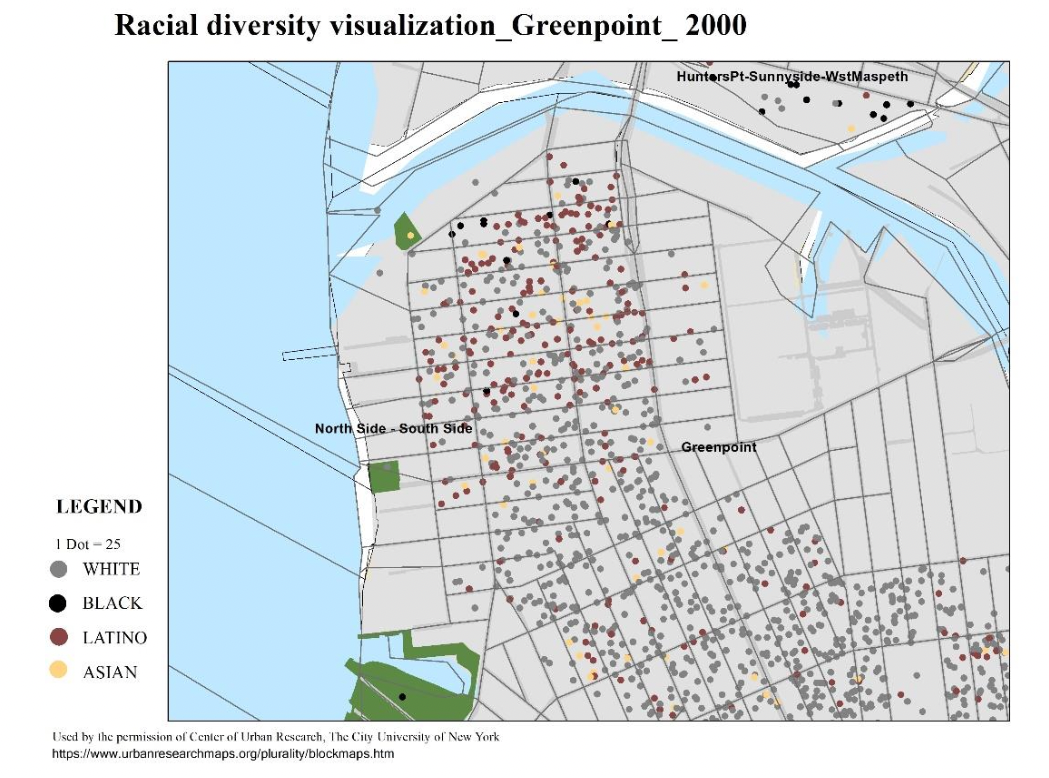
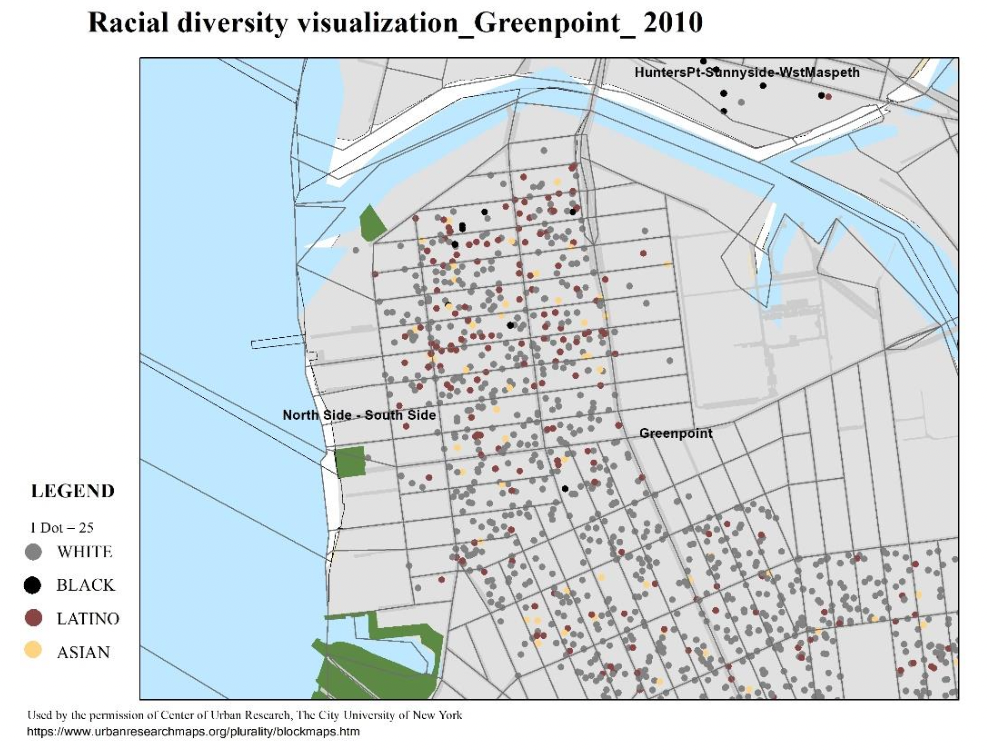
This project examines how zoning and public infrastructure can function as instruments of racialized placemaking, using the 2005 Greenpoint–Williamsburg waterfront rezoning as a case study.
Through demographic mapping and spatial analysis, the project traces how the creation of publicly accessible waterfront parks coincided with significant racial displacement: most notably the decline of Latino households and the increase of white residents near the waterfront.